

Women characters in U.R. Anantha Murthy’s Samskara: A Lohian Reading
A Lohian reading of U.R. Anantha Murthy’s Samskara, examining its portrayal of Brahmin and lower-caste women, patriarchy, caste, sexuality, women’s agency, and the novel's absence of female voices.
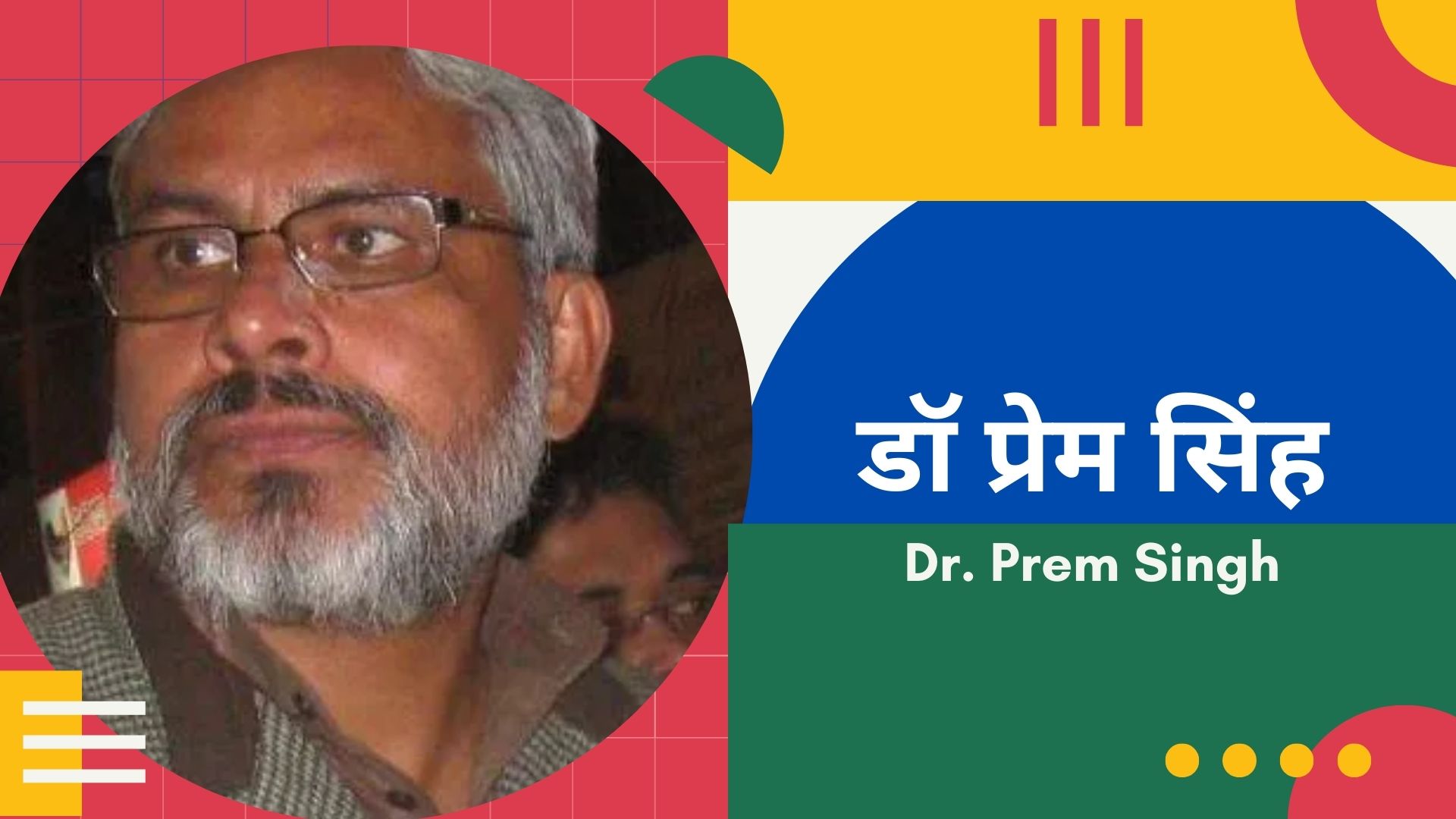
(समाजवादी आंदोलन से जुड़े लेखक दिल्ली विश्वविद्यालय के पूर्व शिक्षक और भारतीय उच्च अध्ययन संस्थान, शिमला के पूर्व फ़ेलो हैं।)
Women in Samskara: Caste, Patriarchy and the Missing Voice of Female Characters
Prem Singh offers a Lohian reading of U.R. Anantha Murthy’s Samskara, examining its portrayal of Brahmin and lower-caste women, patriarchy, caste, sexuality, women’s agency and the absence of female voices in the novel. The article also explores Anantha Murthy’s engagement with Ram Manohar Lohia’s ideas of gender equality and social transformation.
I sent the attached article to Indian Literature (the literary journal of the Sahitya Akademi) after the demise of U.R. Anantha Murthy with the following note :
(I read this paper in a special lecture program organised by the Sahitya Akademi at its Bangalore office in 2010. Prof. U.R. Anantha Murthy himself chaired the program. He inquired two/three times whether I had published the article. However, I did not send it to any journal for publication. Now I have sent the article to the 'Indian Literature' as a tribute to Anantha Murthy Ji.)
I was told that the decision about the selection/rejection of the article would be conveyed to me in 3 months. However, there was no communication from the journal’s end even after one year. I wrote my query to the Editor in this regard two days ago. Fortunately, the ‘team’ responded to my query stating that they are not using the article.
I would like to submit that the ‘team’ should have conveyed its decision much earlier to enable me to find other options in order to get the article published.
This is my tribute to the late writer on U.R. Anantha Murthy’s first death anniversary.
Prem Singh
Women characters in U.R. Anantha Murthy’s Samskara: A Lohian Reading
Prem Singh
Last year I got an opportunity to teach Samskara to the students of M.A. Hindi (final year) at Delhi University. To prepare my lecture for the class, I read the text again after a long time in the Hindi translation. While reading the text, the idea entered my mind that the depiction of the women characters in the novel would bear some impact of Dr Ram Manohar Lohia’s thoughts, considering his influence on the writer, U.R. Anantha Murthy.
It is a known fact that Anantha Murthy has been influenced and inspired by the socialist philosophy propounded by Dr Ram Manohar Lohia. In Lohia’s doctrine of ‘Sapt Kranti’ (seven revolutions) 'nar-nari samata' (man-woman equality) comes first and foremost along with the question of caste.
Lohia has written on this subject with utmost sincerity and compassion. He writes, ‘woman is undoubtedly among the most exploited sections of humanity, together with the poorest and lowliest of men. She may try to forget her condition with love or trinkets and her charitable generosity. But ugly practices of society and certain dark recesses of the soul have both combined to turn the woman into a sphere where socialism is most needed. If socialism and democracy are a battle for equality, they are cut out specially as creed of women.’ (Notes and Comments, Vol. 1, P. 32) Lohia argues that Draupadi should be the model for Indian women, not Savitri. Yet, he shows a great regard for Savitri and Sita. According to Lohia, chastity (Satitava) is only one virtue of a woman, but she has several more virtues, which should not be sacrificed for the one, i.e. chastity. He finds Draupadi intelligent, with her presence of mind and courage to ask questions. The women’s question is at the core of Lohia’s socialist philosophy and political actions. It would appropriate therefore to analyse the treatment meted out to the women characters in this novel from a Lohian perspective.
Samskara is a theme-loaded novel juxtaposing the pulls and pushes between the esoteric and the hedonistic, the transcendental and the mundane, the scriptures and human life, and so on, in a complex manner. Thus, the novel is open to different interpretations from various aspects and angles with different perspectives. In this paper, I would like to focus on the women characters depicted in the novel to ascertain their significance, if any, in the making of the novel’s theme.
There are two categories of women in the novel : one, women who belong to the high caste Brahmins, two, women who belong to the ‘low’ castes. Bhagirathi, the invalid and sick wife of Praneshacharya; Lakshmidevamma, a half-mad child-widow; Anasuya, the wife of Laksmanacharya; Sita Devi, the wife of Garudacharya; Lilavati, the daughter of Lakshmanacharya and Anasuya and the wife of Shripati, come from the Brahmin campus. The wife of Narnappa, who was abandoned by him and died in insane condition, is mentioned indirectly in the novel. Chandri, a prostitute and mistress of Narnappa, Belli, an untouchable girl, Chinni, friend and neighbour of Belli, Padamavati, a prostitute, are from the ‘low’ castes. Putta’s wife, whom he talks at length to Praneshacharya, the girl, who dances on the rope in the fair of Melige and haunts Praneshacharya in his state of self-reflexivity, also belongs to the ‘low’ caste.
A cursory observation can demarcate these two groups :
The Brahmin women are depicted as plump, disfigured, ugly, unattractive and ignorant/reluctant for sexual pleasure. They are quarrelsome and greedy about material things. The ‘low’ caste women, on the other hand, are beautiful with attractive figures and are readily available for sexual intercourse. They are not greedy about material belongings. Chandri, the prostitute, offers her jewellery to meet the expenses of the last rites of Narnappa. There is no mention of money or some other material gifts to Belli from Shripati. Padmavati does not bargain about for money with Putta when he takes Praneshacharya to her house.
The delineation of the erotic beauty of the low-caste women has been articulated through upper-caste Brahmins in the novel. Their readiness for sex with male Brahmins is again a perception of the Brahmin men in the narrative. The extreme disregard for the Brahmin women in terms of beauty or lack of it, is again expressed through Brahmin characters who are involved in sexual relationships with ‘low’ caste women. There is no refutation of this perception of the Brahmin males from women of either category.
The role of women in both categories apparently is confined to the worldly/mundane affairs only. That too on a very limited scale. They do not have any say in the philosophical-spiritual contemplations that take place in the novel on Brahminhood, salvation, scriptures or rites.
The title Samskara does not apply to them; thus, they are outside the theme of the novel. However, and ironically, the last rite of Narnappa, which is the central and contentious issue in the novel, is performed by Chandri, the ‘low’ caste woman, with the help of a Muslim. Further, there are no moments of self-reflection or self-realisation in any of the women characters. At one point, Chandri tends to go through a moment of ‘anxious thoughts’ when she broods, ‘Why does everything I do turn out this way? I gave the gold out of my goodwill, and it made nothing but trouble. And now the Acharya is in trouble, trying so hard to get the funeral rites performed right.’ (68) But the narrative reminds the reader immediately that ‘Chandri was a natural in pleasure, accustomed to self-reproach.’ (68) She then remembers the sexual intercourse episode with the Acharya in the forest that night and feels ‘only a sense of worthwhileness, like the fragrance of flowers hidden.’ (68) Thus, the entire narrative suggests that the Brahmin women are born to perform domestic, routine, family duties, as if they are the workforce recruited to look after the household without a personality of their own. Such a treatment of women characters is reductive as it presents them almost as caricatures. The ‘low’ caste women are depicted as dark brown, sensual and servile; born to fulfil the sexual desire of upper caste men as and when they need them.
There is little mention of sex between male characters and women from the Brahmin category.
Shripati’s wife does not allow him sex and ‘tightens and twines up her thighs’ following the advice of her mother. But he does not make any conversation with her on this issue. It is to be noted that the sexual intercourse is performed without a word spoken from either side. Shripati listens to the recitations of holy legends by Praneshacharya on his verandah every evening. One night, listening to the detailed description of Shakuntala, the heroine of Kalidasa, an uncontrollable sexual desire is aroused in him, and he runs from the spot to take a plunge in the cold water of the river. There he finds Belli, who had come to the river to fetch water and has sex with her under the full moon. No word was spoken by either side during the intercourse. One night, while returning from Shirnali in a drunken state, Shripati plans to have sex with Belli. He thinks, ‘Which Brahmin girl, - cheek sunken, breast withered, mouth stinking of lentil soup, - which Brahmin girl was equal to Belli?’ (37) He describes the raw beauty of Belli in a explicit manner.
Shripati calls her by clapping outside her hut and embraces her as she comes out. She wants to stop him for that day because his neighbours Pilla and his wife have just died, and their corpses were being burnt within their hut. Shripati had also seen that fire a few minutes ago. But Shripati’s experience tells him that she had never talked before like this and ‘had always been like ripe ears of corn bending before the falling rain.’ He does not stop, fulfils his desire and goes away saying, ‘Belli was all right for sleeping with; she was no good for talk.’ (40-41)
Shripati is a frequent visitor to Belli’s hut, every time he has sex with her; it is without sharing any of his activities or ideas. He dismisses her talking because, according to him, ‘If she opens her mouth, she talks only ghosts and demons.’ (41) Belli keeps her self almost naked most of the time, and her nakedness haunts even Praneshacharya.
Chandri, though she appears for a short period, is a memorable character in the novel. Although she is generous and kind, the first and foremost quality, noted about her, is her physical beauty. She has been living with Narnappa in the agrahara for 20 years. But she mostly stays inside the house where Brahmins do not enter. She comes out in the open on the demise of Narnappa. Durgabhatta, with erotic feelings, calls her a ‘Chitrni’, as described by Vatsyayana, with long fingers and solid breasts, who would suck the male dry in sex. He finds her more beautiful even in the state of grief and fear. (8) According to Shripati, ‘Chandri was utterly beautiful, beyond compare.’ (38) He compares Chandri with Menaka ‘who destroyed the penance of Sage Vishvamitra.’ (38)
The sexual intercourse between Praneshacharya and Chandri takes place in a dark, lonely forest in silence, without speaking a word.
In the episode, the Acharya just cries ‘amma’ and Chandri weeps. It is a unique portrayal of a sexual scene, difficult to find in other fictional works. Praneshacharya awakes at midnight and finds himself in the lap of Chandri, feeling like ‘a stranger to himself’. Then he comes to realise the reality and calls Chandri, who is afraid that he ‘might scold her, despise her’. However, she has ‘a hope in her that his touch might bear fruit in her body. And a gratefulness that she too might have earned merit.’ She thinks all this without actually saying anything.
Praneshacharya shows some firmness of mind for a moment and speaks to Chandri for the first time in the entire narrative. ‘Chandri, get up. Let us go. Tomorrow morning when the Brahmins gather, we’ll say this happened. You tell them yourself.’ He further tells her that he had lost the authority to decide for the agrahara and won’t have courage to speak about this to people so Chandri ‘must speak out’. He also conveyed to her that he would perform the funeral rites of Narnappa himself. ‘Having said the words, Praneshacharya felt all his fatigue drop from him.’ (68)
As usual, Chandri does not respond to his words and reaches the agrahara a little later. She goes straight to Narnappa’s house. She does not want to expose Praneshacharya to the wrath of the Brahmins waiting for his decision. Then she takes a bold decision and walks for one mile in the night to call Ahmad Bari, a Muslim friend of Narnappa, and performs his funeral rite with his help. Her character touches a new sublimation in this episode. The author writes, ‘Chandri wept, came back home, collected a few of her silk saris in a bag, bundled up the cash in the box and the gold ornaments the Acharya had returned, and came out. Suppressing her desire to wake up the Acharya and touch his feet, she decided to catch the morning bus to Kundapura and walked towards the motor route in the forest path with her bundle in her hands.’ (70) Her departure from the agrahara is her departure from the novel as well.
In this entire episode the beneficiary is Pranesharya whose ‘fall’ makes him free from the clutches of the scriptures and allows him entry into the new, humane/demonic experiences. Chandri, the woman, becomes merely a stepping stone for him. From the beginning of the novel, it is clear that Praneshacharya never thinks of talking with Chandri while he has heated bouts of argument with Narnappa at his house. Narnappa, who offers strong arguments in debates with Praneshacharya, too, does not maintain a dialogue with Chandri. Once, when she tries to stop him from excessive drinking before Praneshacharya, he pushes her aside. Chandri, otherwise a generous and kind woman, becomes a medium for personal motivations or an object of use for both, Narnappa and Praneshacharya. Narnappa uses her for his freedom and lust, and Praneshacharya for his unwinding and self-realisation.
Bhagirathi, the invalid and sick wife of Praneshacharya, is also a means for him to the goal of salvation. It is true that otherwise her life would have become miserable in the worst manner. But the service she receives is a by-product of the Acharya’s natural ‘‘Goodness’’ – sattvik vritti – that makes him craven and hungry for the Lord’s grace. He himself admits, ‘This invalid wife is the sacrificial altar for my sacrifice.’ (76)
The character of Chandri can be discussed in some more detail. She emerges as a strong and independent woman in comparison to the Brahmin women who could not cross even the boundary of the agrahara. Chandri is an active, mobile and self-reliant character. It is her own decision that she comes and lives with Narnappa; she takes the initiative in the intercourse with Praneshacharya by feeding him with plantains, taking her sari off, spreading it on the ground, and first lies on it hugging Praneshacharya close to her; (63) She takes every decision on her own, including the one to reject Praneshacharya’s advice of facing the Brahmins of the agrahara jointly, because she does not want Praneshacharya to accept his ‘fall’ before the Brahmins; she performs Narnappa’s last rites with the help of a Muslim in a quick decision; then she decides to leave Narnappa’s house and walks alone through forest path to catch a morning bus to Kundapura from where she came to Durvasapura.
The most important aspect of her strength is that she does not get pregnant by Narnappa even after several years of living together. It seems that she had a plan and hopes in her mind that one day she would conceive by Praneshacharya and become a mother. Her mother used to say that ‘prostitutes should get pregnant by such holy man. Such a man was the Acharya; he had such looks, virtues; he glowed. But one had to be lucky to be blessed by such people.’ (46) This, of course, would be entirely a matter of hypothesis, but Chandri would have gone to the forest with the hope that she would meet the Acharya there and fulfil her desire. It could have been an unplanned moment for the Acharya; but Chandri might have had her own plans to create the moment.
But one should not confuse her strength and independence with the essence of her womanhood. The source of her strength is the traditional institute of prostitution in India. She cannot change or bypass her lot as a prostitute. In fact, she finds herself content and comfortable within the tradition and never raises any question about it. She knows that after the death of Narnappa, she cannot stay in Durvasapura. That is why she goes back to her native place Kundapura. The subjectivity of Praneshacharya knows no limits of expansion after the intercourse with Chandri. But Chandri does not have such a fortune. Subjectivity does not breed subjectivity!
Padamavati, a prostitute, appears to be a beautiful and serious-minded woman in the novel. Her beauty attracts Narnappa, a philanderer, always in search of new women. He too has sex with Padamavati, without any dialogue, without making any conversation. He rather becomes, as Putta describes, violent with her in his drunken state. Padamavati too speaks nothing before Praneshacharya. Putta, the pimp, always speaks about, and on her behalf.
What I want to suggest is that no woman in the novel, from either category, has her own voice to prove her to be a thinking and questioning being. Lakshmidevamma is the only exception who hurls curses on Garudachrya and his family for robbing her property because she was a helpless child widow. But no one pays any heed to her. She is an isolated creature in the agrahara, and no one cares for her ranting.
The woman characters in Samskara appear real in the given setting of the decadent Brahminical milieu based on the caste system and patriarchy, as the novel is placed in some decade of the first half of the twentieth century. Narnappa says, ‘Your texts and rites don’t work any more. The Congress Party is coming to power; you will have to open up the temples to all outcastes.’ (21)But it was in 1965 that the novel was published. By this time the thoughts of Lohia had made a substantial impact on society, politics, culture, literature, language and art. Otherwise too, no agrahara, howsoever remote, could have escaped the enlightening wave of the ‘Navajagaran’ and the freedom movement, not to speak about issues related to the question of de-colonisation or post-colonialism. There are voices of revolt within the tradition itself from which Narnappa produces several examples to ridicule the Brahmins and Brahminhood in the novel. Several other novels in other Indian languages do not conform to such a static image of women, whether they be housewives or prostitutes. Even in the patriarchal setup, women play politics and generate their own ideas of liberation, which may be flawed. In the absence of such a ‘gender politics’, Samskara has become a narrative of great promise but an aborted literary protest. In a novel by a writer like Anantha Murthy, who has been influenced by Lohia, it appears strange that there is little impact of his thoughts in the delineation of women characters, and they do not contribute in a substantial degree to the making and to the theme of the novel.
There is no doubt that the novel is an excellent work of literary realism with a very fine fusion of allegoric mode of narration, and it is widely accepted that literature cannot offer a magic potion to solve social evils. But as a critic having socialistic concerns, who view literature as a vehicle for social change, it is my hope that a work of art, especially if the writer is influenced by the Lohian thoughts, will suggest or indicate some kind of strong socialist protest or rebellion against a given social, traditional set-up that demeans women.
As I mentioned earlier, it was a re-reading of the novel that I admired immensely, and I began to look for Lohian images of the ‘new woman’ who will move out of the stereotype of the Brahminical or the Dalit mould. As Lohia points out, there is nothing wrong in being Sita or Savitri; it is the obsession with the Lakshman-Rekha of one virtue or two virtues only that limits and confines the multi-faceted capacity of a woman. Lohia’s belief is that a woman is not defined merely by her relationship with men – be it her father, brother, husband or son. She has a life outside her domestic and sexual role. In Samskara, Chandri answers this need for emancipation to a large extent, there is no doubt about it, but this aspect of her character is not highlighted; it is more of a matter of the readers’ hypothesis. If the marginalised do not speak, it does not mean that they do not have ideas or arguments, and an author who is sensitive to their plight can definitely lend a mic to help them raise their voices, howsoever feeble.
Dr Prem Singh, Dept. of Hindi, University of Delhi, Delhi - 110007 (INDIA). Former Fellow, Indian Institute of Advanced Study, Shimla, India. Presently Visiting Professor, Centre of Eastern Languages and Cultures, Dept. of Indology, Sofia University, Sofia, बुल्गारिया.
FAQs
1. What is Prem Singh’s argument about women characters in Samskara?
Prem Singh argues that although U.R. Anantha Murthy’s Samskara is a major work of literary realism dealing with caste, Brahminism, tradition and individual transformation, its women characters have limited agency and largely lack an independent voice as thinking and questioning subjects.
2. How does Ram Manohar Lohia’s thought relate to Samskara?
The article examines Samskara through the ideas of Ram Manohar Lohia, whose socialist philosophy placed man-woman equality (nar-nari samata) among the central objectives of social transformation. Singh asks why this aspect of Lohia's thought appears to have little visible influence on the representation of women in Samskara, despite Anantha Murthy's known engagement with Lohia.
3. Which women characters are discussed in Samskara?
The article discusses several women characters, including Chandri, Belli, Padmavati, Bhagirathi, Lakshmidevamma, Anasuya, Sita Devi and Lilavati. It examines both Brahmin women and women from socially marginalised castes and communities.
4. How are Brahmin women portrayed in Samskara?
According to Prem Singh's reading, Brahmin women are largely presented through physical unattractiveness, domesticity, illness, ignorance, quarrelsomeness or attachment to material concerns. Their lives remain primarily confined to household and family affairs, while the novel's major philosophical debates take place among men.
5. How are lower-caste women portrayed in Samskara?
Singh argues that women from lower castes are generally depicted as physically attractive, sexually accessible and connected to the desires of upper-caste men. Chandri and Belli are particularly important to this argument. The article questions whether such representations genuinely give marginalised women agency or merely reproduce the perceptions of male characters.
6. Why is Chandri important in a reading of Samskara?
Chandri is arguably the most active and independent woman in the novel. She makes important decisions herself, including dealing with Narnappa's death, arranging his funeral and eventually leaving the agrahara. Singh nevertheless argues that Chandri's agency remains limited because she is primarily used within the narrative as an instrument in the transformation of male characters, particularly Praneshacharya.
7. How does Chandri contribute to Praneshacharya's transformation?
Chandri becomes central to Praneshacharya's personal crisis and self-realisation. His sexual encounter with her breaks his established relationship with scriptural authority and contributes to his movement away from the rigid Brahminical world. Singh therefore sees Chandri as a catalyst for Praneshacharya's transformation, while questioning why her own subjectivity receives much less narrative attention.
8. What is the significance of women's silence in Samskara?
For Singh, women's silence is one of the most important limitations of the novel's gender representation. Women participate in domestic, sexual and material aspects of the narrative but rarely engage in the philosophical and social debates that determine its central themes. The absence of sustained female dialogue raises questions about their status as autonomous subjects.
9. What does the article say about caste and patriarchy in Samskara?
The article connects caste hierarchy with patriarchy and argues that the novel's women are shaped by the social structure of the Brahminical agrahara. It also examines how relationships between upper-caste men and lower-caste women reproduce unequal social and gender relations.
10. Why does Prem Singh describe Samskara as a “narrative of great promise but an aborted literary protest”?
Singh considers Samskara an important and sophisticated literary work but argues that its critique of a caste-bound and patriarchal society does not develop into a strong enough gendered protest. In his view, the novel exposes the oppressive social order but does not give its women characters sufficient intellectual or political voice to challenge that order themselves.
11. What is a Lohian reading of literature?
A Lohian reading examines literature through the social and political ideas associated with Ram Manohar Lohia, particularly equality, opposition to caste hierarchy, gender justice, democratic socialism and social transformation. In this article, the approach is specifically applied to the representation of women in Samskara.
12. What does Lohia mean by “nar-nari samata”?
“Nar-nari samata” means equality between men and women. It was a central component of Lohia's broader programme of social transformation and his conception of the Sapt Kranti (Seven Revolutions).
13. Why does the article compare Draupadi, Sita and Savitri?
The comparison draws upon Lohia's interpretation of Indian cultural traditions. Singh notes Lohia's argument that women should not be restricted to the single virtue of chastity and that Draupadi's intelligence, courage and questioning spirit could provide an important model for women's emancipation. This becomes a framework for asking whether the women of Samskara are allowed comparable intellectual and moral agency.
14. What is the central criticism of Samskara from a gender perspective?
The central criticism is that women in the novel are predominantly represented in relation to domesticity, sexuality, caste and men's self-realisation, rather than as autonomous intellectual and political subjects. Even when a character such as Chandri demonstrates independence, the narrative does not fully develop her inner world or give her an enduring voice.
15. Why is this reading of Samskara significant today?
The article remains relevant because questions of caste, patriarchy, women's agency, social equality and representation in literature continue to be important in Indian literary criticism. A Lohian reading also invites readers to examine the relationship between a writer's intellectual influences and the actual social perspectives represented in a literary work.


